
Choosing a Program
How to Find the Right Summer Program Without Searching Hundreds of Websites
There are thousands of summer programs for middle and high school students. That sounds like a good thing… until you actually try to find the right one for YOUR teen.
Programs are scattered across hundreds of websites. Some programs are dedicated to a subject and a grade bracket, some providers offer several destinations or types of experiences, and for different age groups. Dates and prices aren't always easy to compare. And if your teen has something specific in mind, finding it can require a surprising amount of digging.
The good news is that you don't need to look at everything.
A better approach is to start with what your teen actually wants from the summer, add the constraints that matter, and gradually narrow the possibilities.
Here's how we approach it.
1. Start with what your teen actually wants to do
It's easy to start a summer search with familiar broad categories:
- Summer programs for middle school students
- Pre-college programs
- Teen travel programs
Those are useful starting points, but they're incredibly broad.
Instead, ask your teen a more interesting question:
What would you actually be excited to spend part of your summer doing?
The answer might be marine biology. Learning Japanese. Hiking. Building a robot. Photography. International relations. Scuba diving. Architecture. Entrepreneurship.
Or it might be less about the subject and more about the experience: living on a college campus, traveling somewhere new, spending time outdoors, or meeting students from other countries.
Start there.
You can worry about program names and providers later.
2. Add the constraints that actually matter
Once you know what you're looking for, add the practical realities.
For most families, a few constraints quickly eliminate a large portion of the options:
- Current grade and age
- Available dates
- Budget
- Residential or day
- Location
- Program length
- How far your teen is comfortable traveling
You don't necessarily need to specify everything at once.
Start with the requirements that really are non-negotiable. If your teen is only available for three weeks in July, dates matter immediately. If you're flexible all summer, don't unnecessarily restrict the search.
The same applies to geography and budget. The fewer restrictions you genuinely have, the more interesting the possibilities can become.
3. Be surprisingly specific
This is where summer-program searching can get much more interesting, and is now more accessible with Explore Summer.
Suppose your teenager says:
I want to do an outdoor program.
That's a start. But what do they actually mean?
Maybe it's:
I want to spend 3 weeks hiking in the Alps.
Or:
I want to learn to scuba dive somewhere tropical.
Or:
I want to work with sharks.
Those are very different summers.
Traditionally, finding something that specific might mean figuring out which organizations offer outdoor programs, opening their websites one at a time, and searching through their trips.
With Explore Summer, you can simply describe what you have in mind. We search across thousands of curated programs and use your request to find relevant possibilities.
See it in action:
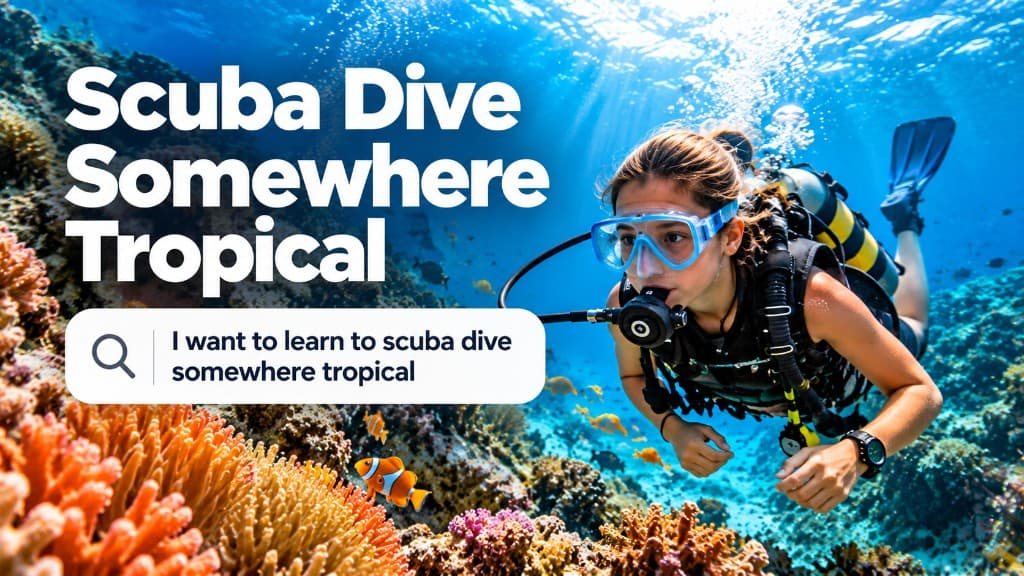


The point isn't that everyone should search with these particular criteria. It's that you shouldn't have to know which program provider offers the experience you're imagining before you start looking for it.
4. You can also start with a destination
Sometimes the destination comes first.
Maybe your teen has always wanted to go to Japan. Maybe they're studying Italian and want to spend part of the summer in Italy. Or maybe Costa Rica is high on the list.
But choosing a destination is only the beginning. The more important question is: What does your teen want to do once they get there?
Take Costa Rica. A summer there could mean Spanish language immersion, sea turtle or wildlife conservation, surfing, hiking and outdoor adventure, community service, marine biology, or a program combining several of these.
Those are very different experiences, even though they all take place in the same country.
So instead of stopping at “summer programs in Costa Rica,” make the search more specific:
I want a program in Costa Rica focused on wildlife conservation.
Or:
Find a Costa Rica program where I can volunteer and spend a lot of time outdoors.
A destination can be a great starting point. It doesn't have to define the experience.
See it in action:
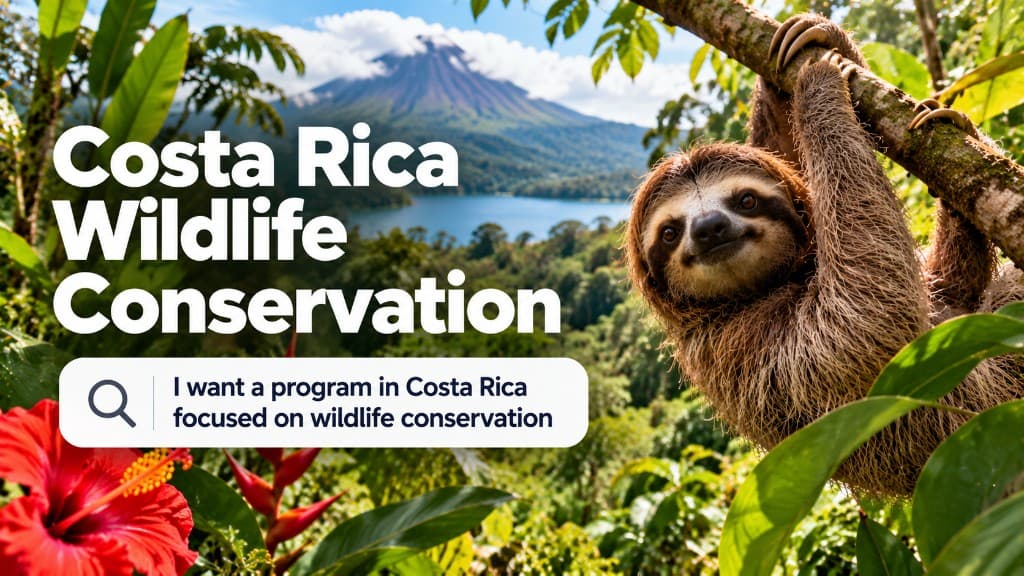


5. Or start with an interest and see where it takes you
The reverse works too.
If your teen is interested in international relations, don't decide on the destination first.
Start your search with the interest and see what's possible.
You might discover a program in ... Estonia, or somewhere else you hadn't considered.
Or in the case of marine science, there are all types of programs, from university-based pre-college programs, field research, scuba programs, sea turtle conservation, coastal ecology, or programs in destinations you hadn't considered.
The same approach works for interests as different as veterinary medicine, architecture, fashion, entrepreneurship, or wildlife conservation.
This is one of our favorite parts of searching broadly: sometimes the most interesting result is something you didn't know existed.
See it in action:


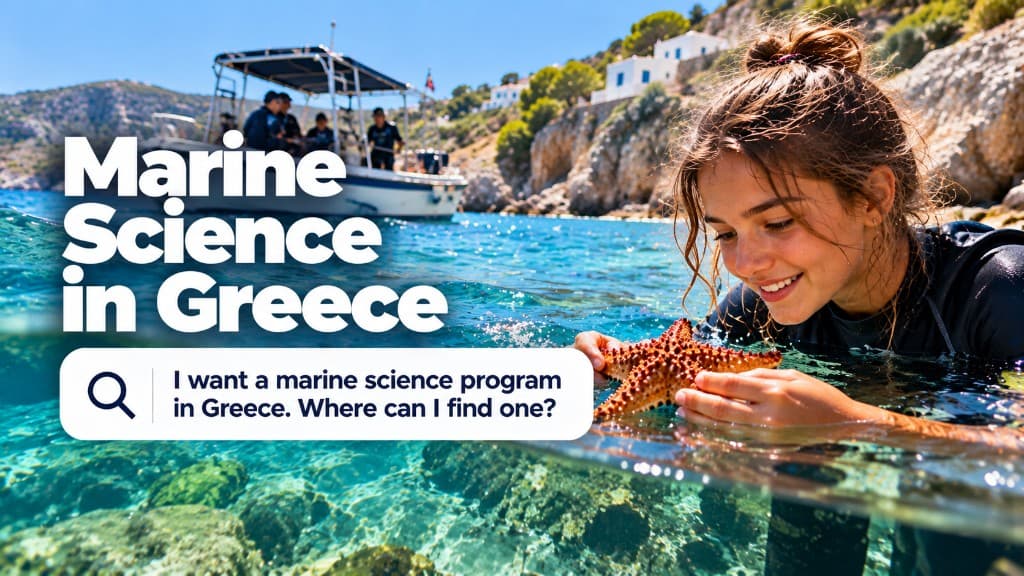
6. If the search is too narrow, loosen one thing at a time
Sometimes a very specific search produces only a handful of possibilities—or none at all.
That doesn't mean you need to start over.
Instead, figure out which part of the request matters least.
If there aren't enough hiking programs in the Alps during your exact dates, perhaps broaden the geography to other mountain programs in Europe.
If you can't find marine biology during the two weeks your teen is available, try ocean science, scuba, or wildlife conservation.
If Italy doesn't work, would your teen consider another Mediterranean country?
Changing one variable at a time helps you understand what's limiting the search without losing sight of what your teen wanted in the first place.
See it in action: we broadened the location to uncover more theater programs.

7. Don't confuse finding programs with choosing one
Discovery is only the first step.
Once you've found several possibilities, the questions change.
Now you want to know:
What will my teen actually do all day?
Look beyond the program title and marketing photos. Compare dates, duration, location, price, age or grade eligibility, application requirements, and deadlines.
For residential programs, look at where students live and how supervised they are. For travel programs, understand the itinerary and how much time is spent actually doing the activities that attracted your teen in the first place.
This is also why Explore Summer researches details such as day-to-day activities and flags things we think families should notice. Sometimes two programs that sound almost identical from their titles are quite different once you look more closely.
8. Build a shortlist before trying to pick the winner
You don't need to decide immediately.
Save the programs that look genuinely interesting and get down to a manageable shortlist.
Then compare them.
Better yet, have your teen look at the shortlist too.
Parents and teenagers don't always notice the same things. You may be comparing dates, logistics, and cost while your teenager is looking at activities, photos, and what a typical day feels like.
Both perspectives matter.
A shortlist turns an overwhelming question — “What should I do this summer?” — into a much easier one:
Which of these would I most like to do?
There isn't one right way to search
You might start with:
- An interest: I want to study international relations.
- A destination: I want to spend part of the summer in Japan.
- An activity: I want to scuba dive.
- An experience: I want to live on a college campus.
Or an oddly specific combination:
I'm looking for a two- or three-week residential program in Europe in July for a 10th grader who loves hiking and photography.
That's exactly the point.
There are too many summer programs, and too many different teenagers, for everyone to start with the same set of categories.
Start with your idea. Then search your way.
See how different ideas turn into actual summer-program searches, from specific destinations to activities and academic interests.
Keep reading